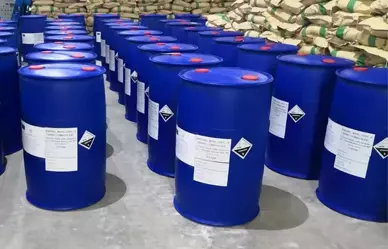
Hypophosphorous Acid plays a critical role in industrial reduction chemistry, especially in processes where controlled electron transfer is required without introducing instability into the system. In manufacturing environments such as electroless metal deposition, its behavior directly influences coating consistency, bath stability, and long-cycle production reliability.
Closely related in chemical functionality, Calcium Hypophosphite serves a different industrial purpose, operating more as a solid-state phosphorus carrier used in formulation-based applications rather than active liquid-phase reaction control.
Why Hypophosphorous Acid is process-critical in industrial systems
In electroless nickel plating and similar surface engineering processes, Hypophosphorous Acid is not just a raw material—it is part of the reaction control mechanism.
The main operational challenge in these systems is maintaining stability over long production runs. Even small variations in acid concentration or contamination levels can shift deposition behavior.
In real plant conditions, engineers typically monitor:
-
bath temperature stability, since reaction kinetics are temperature-sensitive
-
pH drift, which directly affects phosphorus incorporation into coatings
-
trace metal contamination, which can destabilize reduction efficiency
-
decomposition behavior during extended operation cycles
The performance of Hypophosphorous Acid is therefore evaluated less as a chemical property and more as a system stability factor.
In practical terms, it influences:
-
uniformity of metal deposition on complex geometries
-
hardness and corrosion resistance of the final coating
-
overall bath lifespan before replacement or regeneration is required
This is why procurement decisions often focus on batch consistency and impurity profile rather than just nominal chemical grade.
Calcium Hypophosphite in formulation-driven industrial systems
In contrast, Calcium Hypophosphite operates in solid-phase applications where controlled phosphorus release and thermal stability are more important than liquid-phase reactivity.
It is widely used in polymer processing and additive manufacturing systems where flame retardant performance and thermal decomposition behavior matter.
In polymer matrices, its functional role includes:
-
supporting char formation during thermal degradation
-
improving flame resistance in engineered plastic systems
-
acting as a phosphorus source in additive blends
Its calcium component also affects how uniformly it disperses in polymer systems, which can influence processing consistency in extrusion and molding operations.
However, its use requires controlled handling:
-
sensitivity to moisture during storage and transfer
-
need for uniform particle distribution in blending systems
-
compatibility evaluation with other flame retardant additives
Unlike liquid reagents, its performance is strongly linked to physical dispersion behavior inside the material matrix, not just chemical reactivity.
Functional separation in industrial design
Although both materials originate from hypophosphite chemistry, they are not interchangeable in practice.
-
Hypophosphorous Acid is used where active reduction in liquid-phase systems is required
-
Calcium Hypophosphite is used where solid-phase phosphorus incorporation is required
This separation is important because substituting one for the other can disrupt:
-
reaction kinetics in plating systems
-
thermal behavior in polymer systems
-
overall process stability and output consistency
Industrial sourcing perspective
In real-world procurement, engineers prioritize performance reliability over theoretical descriptions. The evaluation typically focuses on:
-
batch-to-batch consistency in industrial conditions
-
impurity levels that affect downstream reactions
-
storage stability during logistics and plant handling
-
compatibility with existing process chemistry
Suppliers such as Neemcco provide these materials with an emphasis on industrial-grade consistency, which is essential in continuous production environments where even minor deviations can cause measurable output variation.
Conclusion
Hypophosphorous Acid and Calcium Hypophosphite serve two distinct but connected roles in industrial phosphorus chemistry. One governs reaction control in liquid-phase manufacturing systems, while the other supports material functionality in solid-phase formulations.
Understanding this distinction is essential for engineers and procurement teams because it directly impacts process stability, product quality, and long-term operational efficiency in industrial-scale production systems.