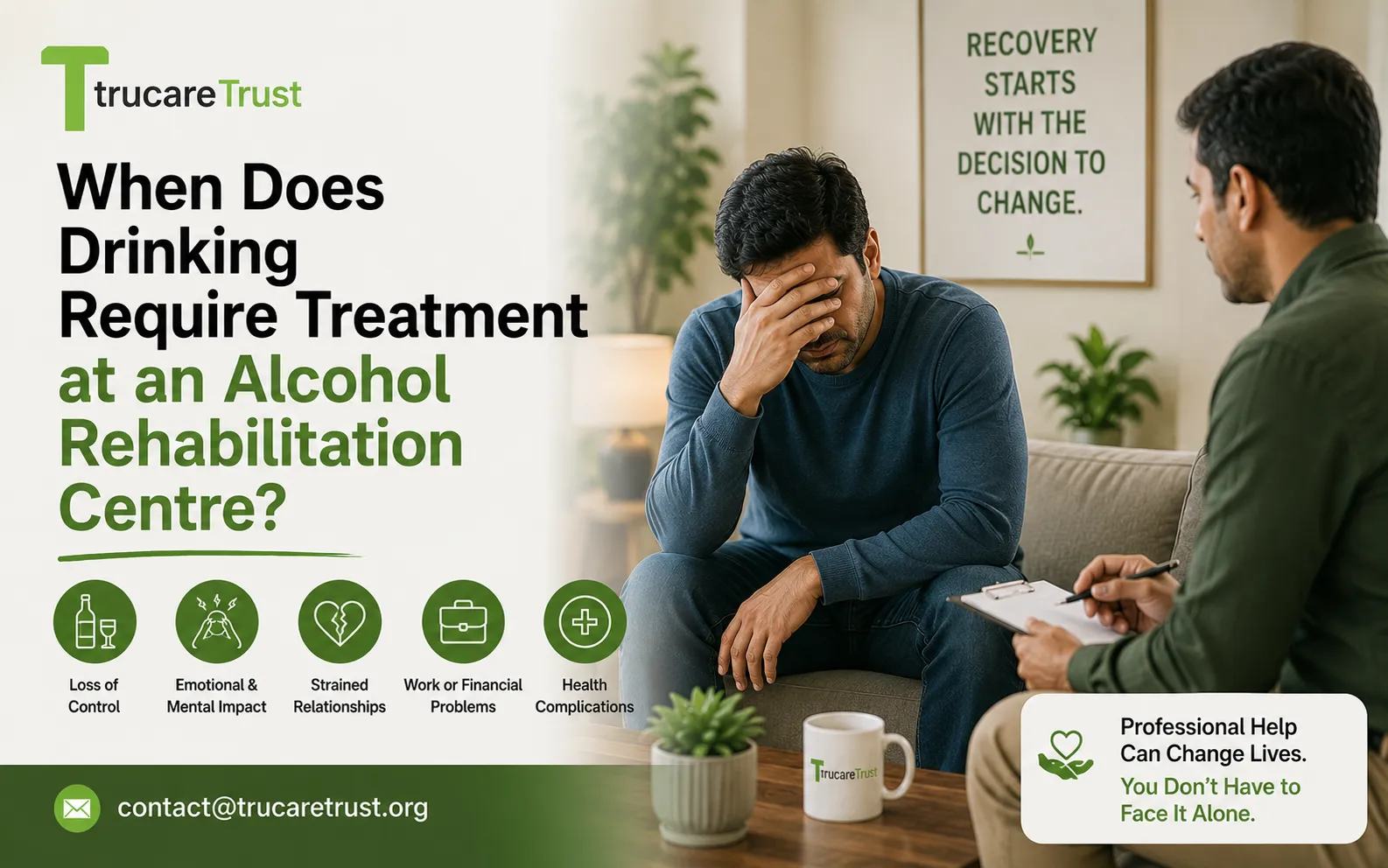
Drinking does not need to reach complete collapse before professional help becomes appropriate. Treatment at an alcohol rehabilitation centre in Mumbai may be needed when alcohol use becomes difficult to control, causes harm or creates withdrawal risks that cannot be managed safely at home.
Decisions should not depend on stigma alone.
Loss of Control Over Drinking
One important sign is repeatedly drinking more or for longer than intended. A person may promise to stop, remain alcohol-free briefly and then return to the same pattern. Strong cravings, hiding bottles, drinking alone or organising the day around alcohol can indicate that use is no longer merely social.
The amount consumed matters, but it is not the only measure. Two people drinking similar quantities may have very different health risks, responsibilities and levels of dependence. A qualified assessment is more reliable than comparing drinking habits with friends or relatives.
Withdrawal Symptoms Appear
Shaking, sweating, nausea, anxiety, disturbed sleep, rapid heartbeat or drinking in the morning to feel normal may indicate physical dependence. Severe withdrawal can involve seizures, hallucinations or confusion and requires urgent medical care. Alcohol should not be stopped suddenly at home when significant dependence or previous complicated withdrawal is suspected.
The Ministry of Social Justice and Empowerment’s 2019 national survey estimated that about 5.7 crore people in India required help for harmful or dependent alcohol use. Despite this need, only a small proportion had received professional treatment.
Health and Safety Are Deteriorating
Medical advice is necessary when drinking contributes to liver problems, high blood pressure, falls, blackouts, poor nutrition, sexual difficulties or worsening sleep. Mixing alcohol with sedatives, pain medicines or other drugs can increase the risk of overdose and accidents.
Emergency assistance is required for unconsciousness, breathing difficulty, seizures, severe confusion, vomiting blood, suicidal behaviour or suspected alcohol poisoning. A routine rehabilitation enquiry should never delay urgent hospital treatment.
Daily Life Is Being Affected
Treatment should be considered when alcohol leads to missed work, financial problems, unsafe driving, legal difficulties or repeated conflict at home. Neglecting children, personal hygiene, meals or important responsibilities suggests that drinking has begun to take priority over ordinary life.
Families may also notice irritability, isolation, lying or loss of interest in activities. These changes can arise from several conditions, so they should prompt assessment rather than accusation.
Outpatient Help Has Not Been Enough
Residential care may be appropriate after repeated relapse, missed appointments or unsuccessful attempts to stop in an unsafe home environment. It may also help when depression, anxiety, trauma or another substance-use problem requires closer observation and coordinated treatment.
Admission is not automatically necessary for everyone. Some people can recover through outpatient counselling, medical reviews, medication and strong family support. The safest level of care depends on withdrawal risk, physical health, mental state, home conditions and previous treatment response.
What Professional Treatment Should Provide
Good treatment includes medical assessment, supervised withdrawal management when required, counselling, relapse-prevention skills, family guidance and discharge planning. It should protect dignity, confidentiality and informed consent.
Before contacting an alcohol rehabilitation centre in Mumbai, families should record drinking patterns, withdrawal symptoms, medicines and previous complications. Early assessment can prevent further harm and identify whether outpatient support, medical detoxification or residential rehabilitation is the most appropriate next step.