Every few months, I’d hire a different link-building agency. I’d hand over a brief, they’d hand back a report, and I’d stare at a list of placements, wondering why nothing was moving.
The domains looked fine on paper. DR 40+, decent traffic estimates, “niche relevant.” But three months later, the rankings were the same. Sometimes worse.
I blamed the algorithm. I blamed my content. I even went through a phase of convincing myself that links just didn’t matter as much anymore.
Then I started actually digging into where my links were going — not the DR numbers, but the actual pages — and what I found was embarrassing in hindsight.
The problem wasn’t the links. It was that I had no idea what I was buying.
Most agencies work like a black box. You give them a target URL and an anchor text, they disappear for three weeks, and a PDF shows up with live URLs. You’re supposed to feel good about it because the spreadsheet has green checkmarks.
But here’s what I never asked: Who is this publisher? Is this site actually getting traffic, or does it just have a DR from old links? Is my article sitting next to 40 other guest posts from completely unrelated niches?
When I finally started asking those questions, I realized I’d been buying placements on what I’d now call link farms dressed in WordPress themes. Real-looking URLs. Zero real readership. And in many cases — I only realized this later — these were effectively private blog networks that had learned to disguise themselves as legitimate guest post sites. New articles every week, decent DA scores, but no organic traffic, no engaged audience, no editorial judgment about what they published.
Google doesn’t need to explicitly penalize these. It just quietly ignores them.
The shift that actually worked
At some point, I stopped outsourcing the decision and started outsourcing just the execution.
That distinction matters more than almost anything else in link building. When I outsourced the decision, I was trusting someone else’s incentives — which, with most agencies, means filling a quota with whatever publisher inventory they have available. When I took back control of which sites I wanted, everything changed.
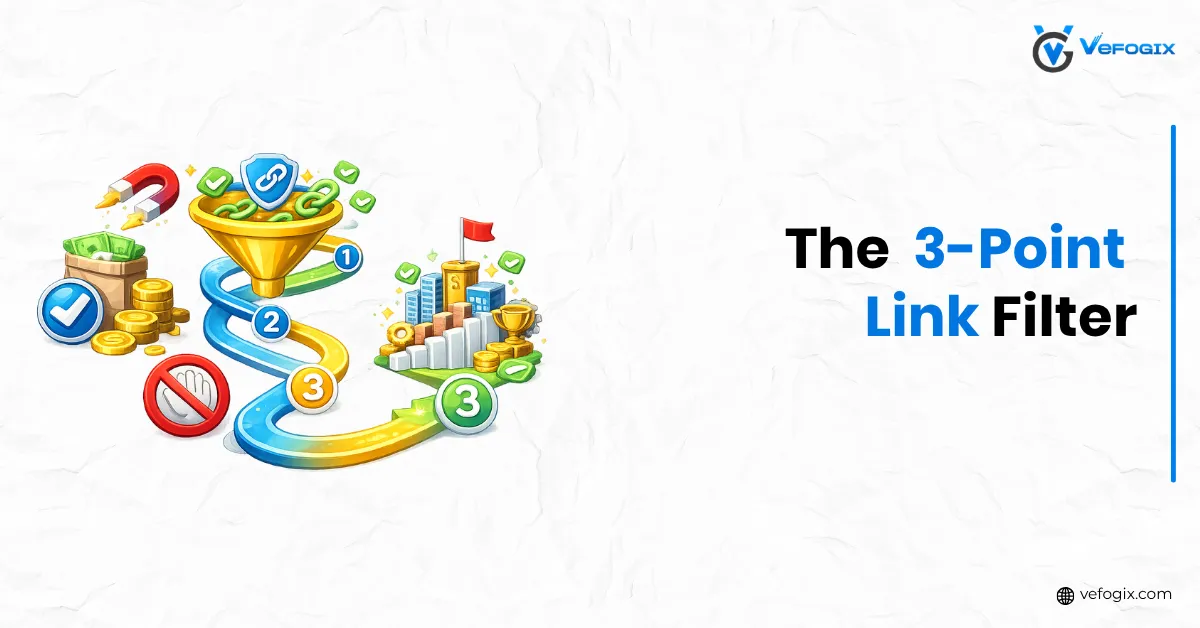
I built a simple three-point filter. Before I agree to any placement:
1. 90-day organic traffic check.
I pull the site in Ahrefs or Semrush — not the site’s own claims, the third-party estimate. If it’s flatlined or declining, I pass. A DR 50 site with no organic traffic is a trophy with no value.
2. The last 5 articles published.
This tells you the actual editorial standard. Are the articles dated and real? Is there variety in topics, or is everything suspiciously optimized? Are there bylines from real people? Five articles will tell you more than any metric.
3. Does the linking page have any links pointing to it?
This is the “orphan page” trap people don’t talk about enough. A guest post published on a page with zero incoming links — no internal links from the site, no external backlinks — is essentially invisible. The domain might be strong, but that specific page has no link equity to pass. Always check the page, not just the domain.
If I can’t get that information up front, I don’t buy. Full stop.
Why I changed how I use marketplaces
I’ll be honest — I was sceptical of link-building marketplaces for a long time. The early ones genuinely were Fiverr for backlinks. Low-quality inventory dressed up in a dashboard, with no way to verify what you were actually getting until after the money was gone.
But the workflow I eventually landed on doesn’t make the platform the hero — the process is the hero. Whether I’m managing outreach manually or using a marketplace to source placements, the requirement is identical: I need to see real traffic data, I need to see the actual site before I commit, and I need to review and approve content before it goes live.
That last one is bigger than people realize. If you can’t read the article before it’s published, you’re not buying a placement — you’re buying a promise.
I moved to using transparent link building services where that visibility is built in from the start. Whether I’m picking from verified publisher inventory myself or letting a managed team run the process — on a platform like Vefogix where you can filter by real traffic data, niche, and pricing before anything is approved — the filter stays the same. Data before dollars.
What actually moves rankings
Once the selection process tightened up, patterns became obvious. Here’s what I actually see work:
Relevance beats authority, almost every time.
A DR 35 site genuinely read by people in your industry will outperform a DR 70 site that nobody reads. I’ve had single placements on small, actively-trafficked niche blogs move a page from position 14 to position 4. I’ve had placements on high-DR “authority” sites do absolutely nothing. The signal Google cares about is relevance and real readership — not a number in a third-party tool.
The orphan page trap will quietly eat your budget.
Most people check domain metrics. Almost nobody checks whether the specific page they’re being linked from has any incoming links of its own. A freshly published guest post on an otherwise unlinked page passes very little equity, regardless of how strong the domain is. Before you finalize any placement, check the page. If it has no backlinks and no internal links pointing to it from the site’s other pages, push back or walk away.
Velocity is a tell.
If your site has historically gained 3–5 links per month and you suddenly run a campaign that delivers 30 in four weeks, that’s a pattern. Google has seen it before. Boring advice with a non-boring outcome: build at a pace that looks natural for a site your size. Consistency compounds. Spikes invite scrutiny.
The thing that changed how I think about this
Link building started working for me when I stopped treating it like a purchase and started treating it like a placement decision.
Every link is a vote from one site to yours. The question worth asking before any campaign is: Why would this site actually want to link to me? If the honest answer is “because I’m paying them to,” and there’s nothing else — no genuine relevance, no content that adds something — you’re buying checkmarks, not equity.
The placements that have moved my rankings consistently have one thing in common: there’s a real reason for the link to exist. A genuinely relevant piece of content, on a site that actually covers that topic, read by people who care about it.
If you’re looking at a link report right now and can’t answer “why does this site deserve to link to me?” — not “does it have a good DR,” but why does it make editorial sense — you’re probably still gambling.
Stop buying checkmarks. Start buying real estate on the web.